
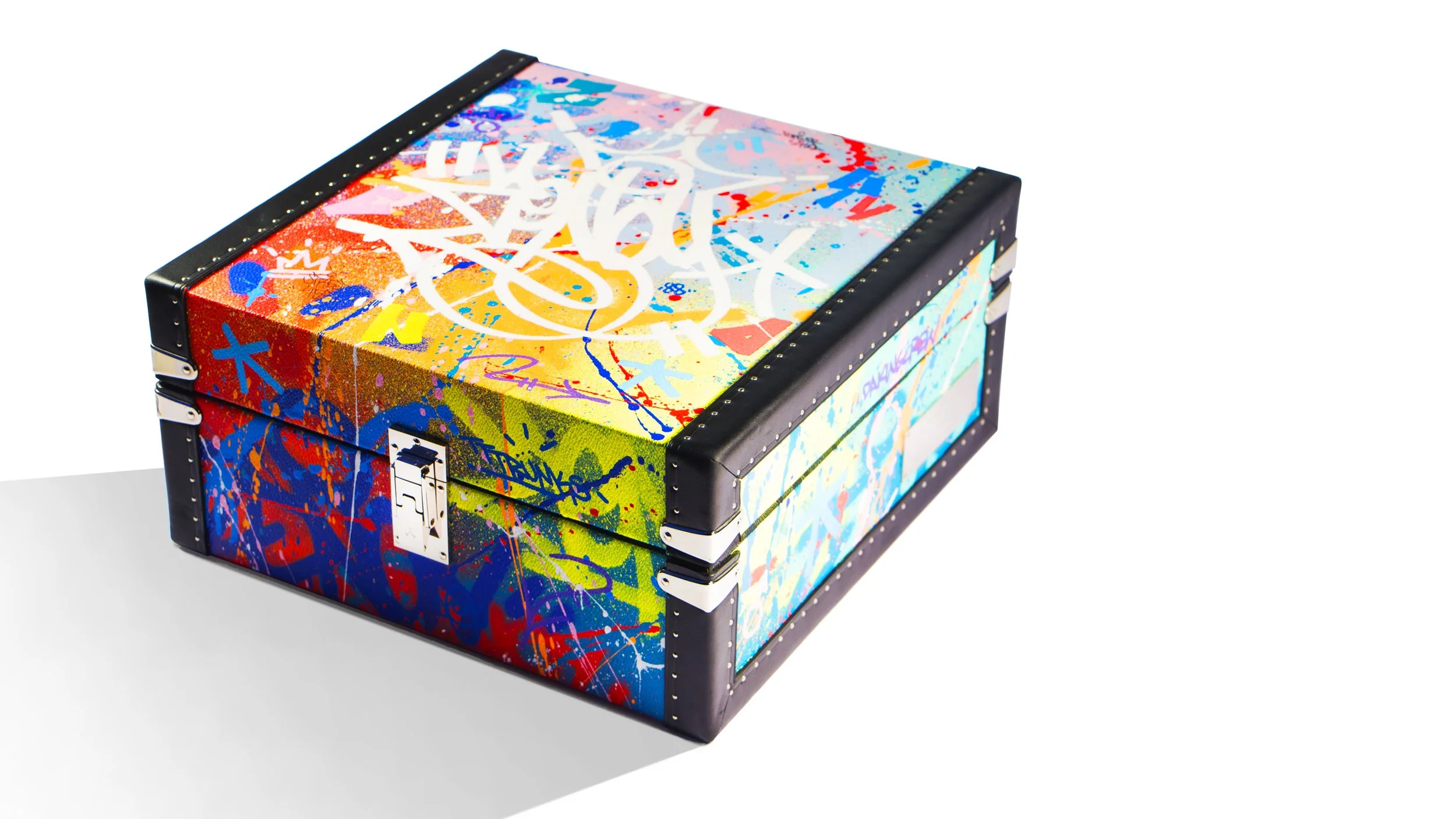
T.T.Trunks × Zenoy
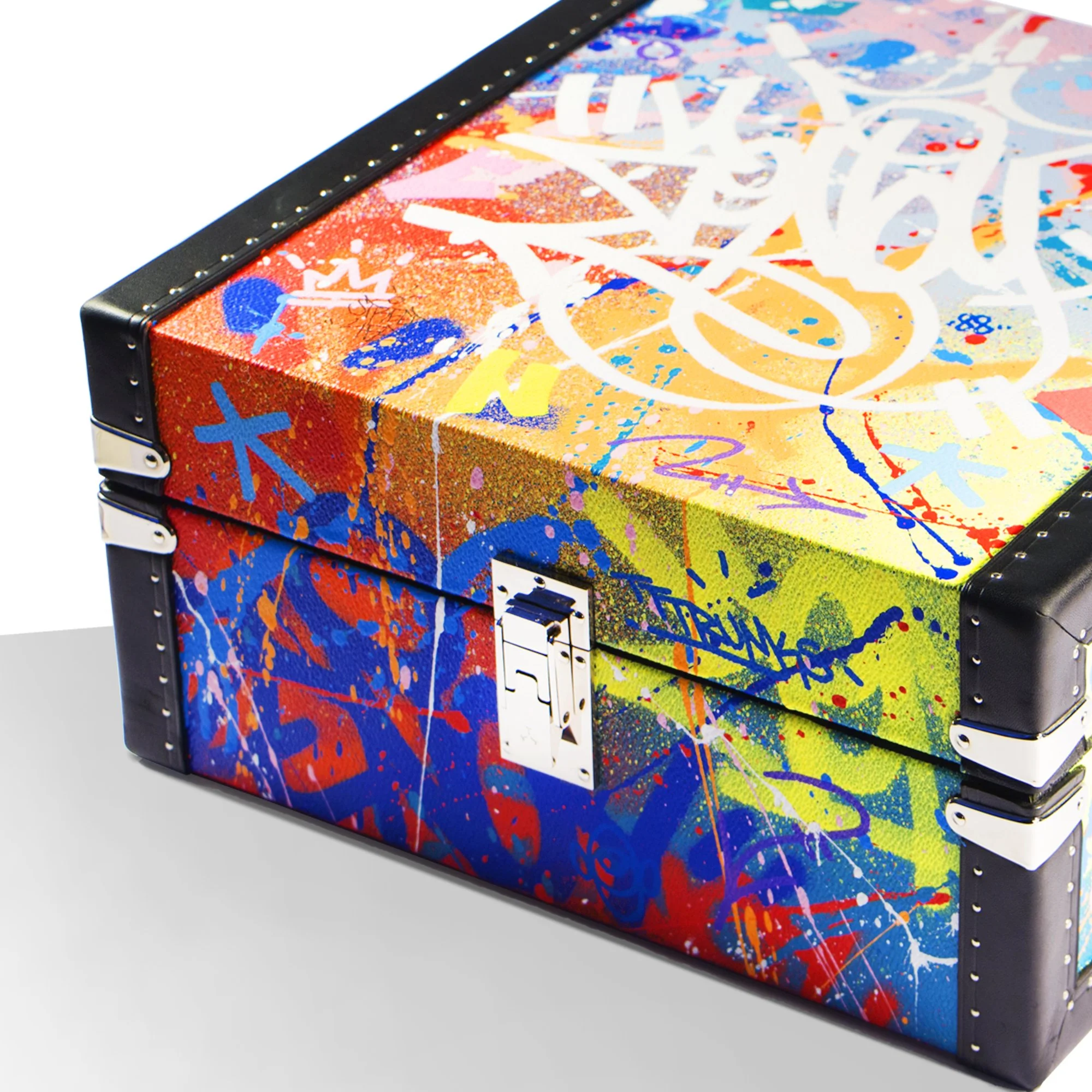
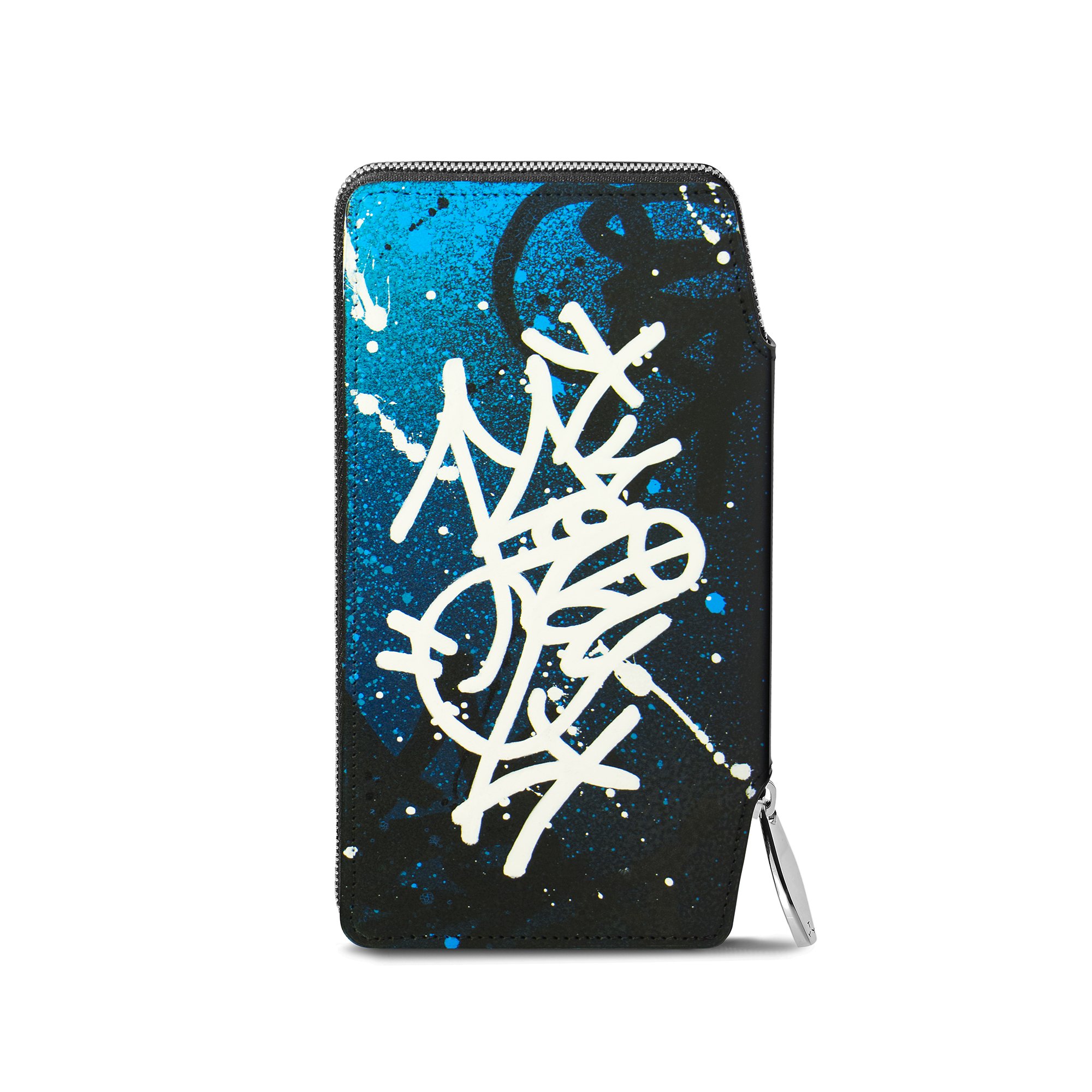
Zenoy, héritier français du writing américain, signe une édition limitée T.T.Trunks.
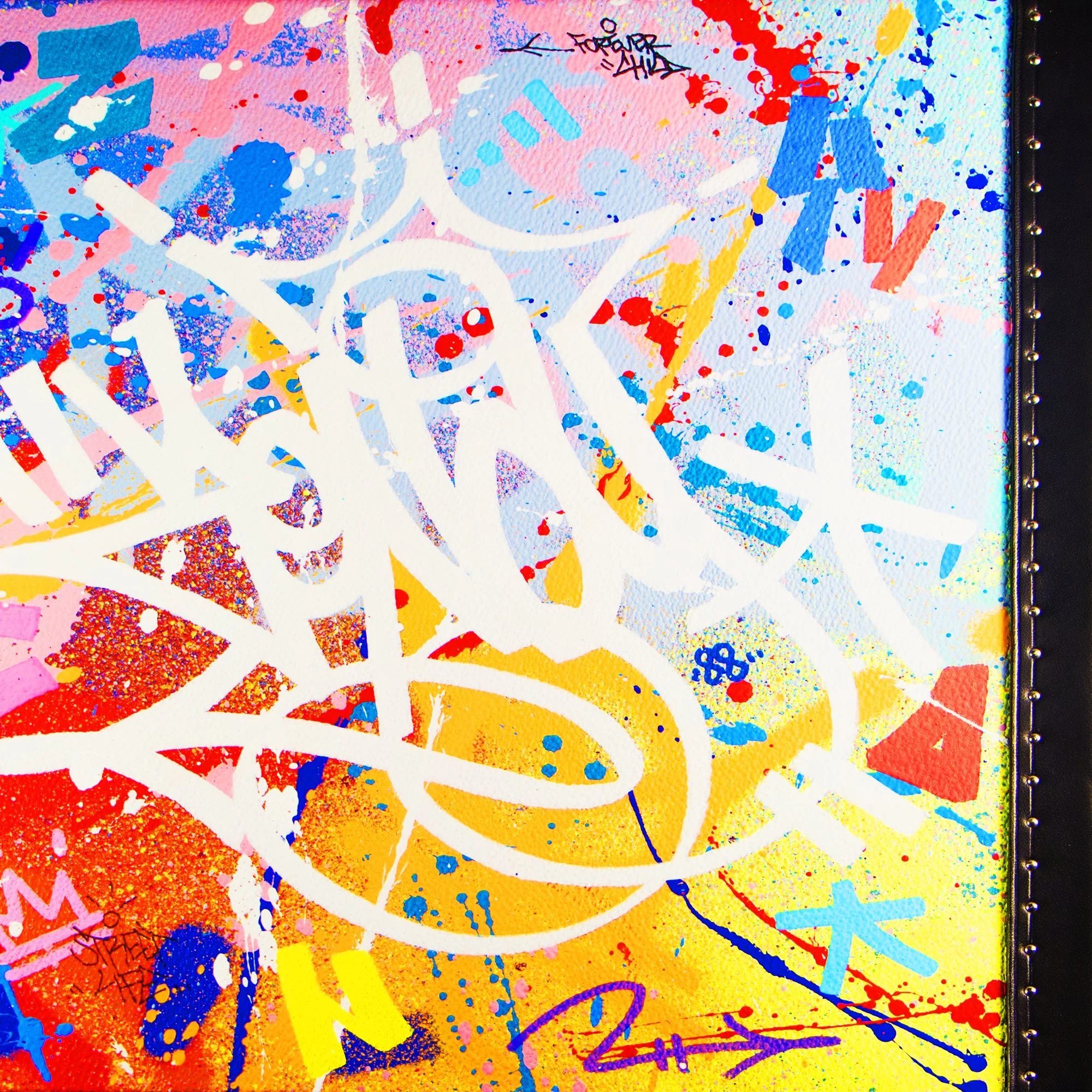
Recherche d'harmonie entre couleurs et formes, transposée du métro parisien sur le cuir.
Zenoy, French heir to American writing, signs a limited T.T.Trunks edition.
A search for harmony between colours and shapes, transposed from the Paris subway to leather.
Le writing, naissance d'un alphabet/ Writing, the birth of an alphabet
Le writing naît à Philadelphie à la fin des années 1960. Un adolescent, Darryl McCray, signe « Cornbread » sur les murs de son quartier ; un autre, Cool Earl, le rejoint. Leur tag n'a rien d'un dessin : c'est un nom écrit, encore et encore, jusqu'à devenir une présence dans la ville. La signature devient un acte plastique.
La pratique gagne New York au début des années 1970. TAKI 183, jeune coursier d'origine grecque, couvre Manhattan de son nom ; le New York Times lui consacre un article en juillet 1971 et révèle le mouvement au public. Les wagons de la subway deviennent des galeries mobiles ; les writers cherchent le « style » plus que la lisibilité du nom et inventent des typographies entières : bubble letters, wildstyle, lettrages 3D.
Le mouvement atteint Paris au début des années 1980, par la diffusion du film Style Wars (1983) et du livre Subway Art (1984). Une première génération française se constitue autour des lignes du métro. Zenoy commence à peindre en 1988, à quatorze ans ; sa recherche porte d'emblée sur l'harmonie des couleurs et des formes plus que sur l'occupation du territoire.
Quarante ans plus tard, sa signature quitte le métal des rames pour le cuir des malles T.T.Trunks. Le support a changé. Le geste demeure : poser un nom comme on poserait une marque, et en faire un objet de désir.
Writing was born in Philadelphia at the end of the 1960s. A teenager, Darryl McCray, tagged "Cornbread" on the walls of his neighbourhood; another, Cool Earl, joined him. Their tag had nothing of a drawing about it: it was a name written, again and again, until it became a presence in the city. The signature became a plastic act.
The practice reached New York in the early 1970s. TAKI 183, a young messenger of Greek descent, covered Manhattan with his name; the New York Times ran an article on him in July 1971 and revealed the movement to the public. Subway cars became moving galleries; writers chased "style" over name legibility and invented entire typographies: bubble letters, wildstyle, 3D lettering.
The movement reached Paris in the early 1980s, carried by the film Style Wars (1983) and the book Subway Art (1984). A first French generation formed around the métro lines. Zenoy began painting in 1988, at fourteen; from the outset his work pursued the harmony of colours and shapes more than the occupation of territory.
Forty years later, his signature leaves the metal of the train cars for the leather of T.T.Trunks trunks. The medium has changed. The gesture remains: laying down a name as one lays down a mark, and turning it into an object of desire.
Actif depuis 1988, Zenoy est héritier de la technique du writing née à Philadelphie à la fin des années 1960. Cet art de la signature basé sur le travail de la lettre se rattache directement au mouvement hip-hop qui s'est développé de façon considérable à New York dès 1970, dans un contexte de crise budgétaire entraînant le délabrement, voire la désertion de certains quartiers comme le Bronx ou Brooklyn. Cette pratique apparaît en France au début des années 1980 grâce à la médiatisation de la culture hip-hop américaine.
Le travail de Zenoy, recherche d'harmonie entre les couleurs et les formes, s'inspire de cette première génération de writers français. Artiste autodidacte, il se lance à l'âge de 14 ans dans l'art du writing. Si son support de prédilection reste les trains et métros parisiens, il œuvre également sur les murs autrichiens, belges ou hollandais. En dehors de cette pratique urbaine, Zenoy se livre depuis 2000 à la réalisation de graffiti sur toile qu'il expose aussi bien en France qu'à l'étranger, preuve d'une reconnaissance grandissante dans le milieu de l'art contemporain.
Operating since 1988, Zenoy's work leverages the graffiti technique born in Philadelphia at the end of the 1960s. This signature piece based on the art of graffiti is directly linked to the hip-hop culture that exploded in New York City in the 1970s. This art further propagated and became a trend in France in the 1980s due to the increasing publicity of American hip-hop culture.
Inspired by this first generation of French graffiti artists, Zenoy's work achieves a unique balance between colours and shapes. A self-taught artist, he started practising the art of graffiti when he was only 14 years old. While the Parisian trains and subways remain his favourite art media, he has also tagged Austrian, Belgian and Dutch walls. Zenoy has been drawing graffiti on canvas since 2000. His paintings are visible in French galleries as well as abroad, a testimony of his growing notoriety on the stage of contemporary art.
Votre pièce sur-mesure/ Your bespoke piece


Imaginons ensemble votre pièce/ Let's imagine your piece together