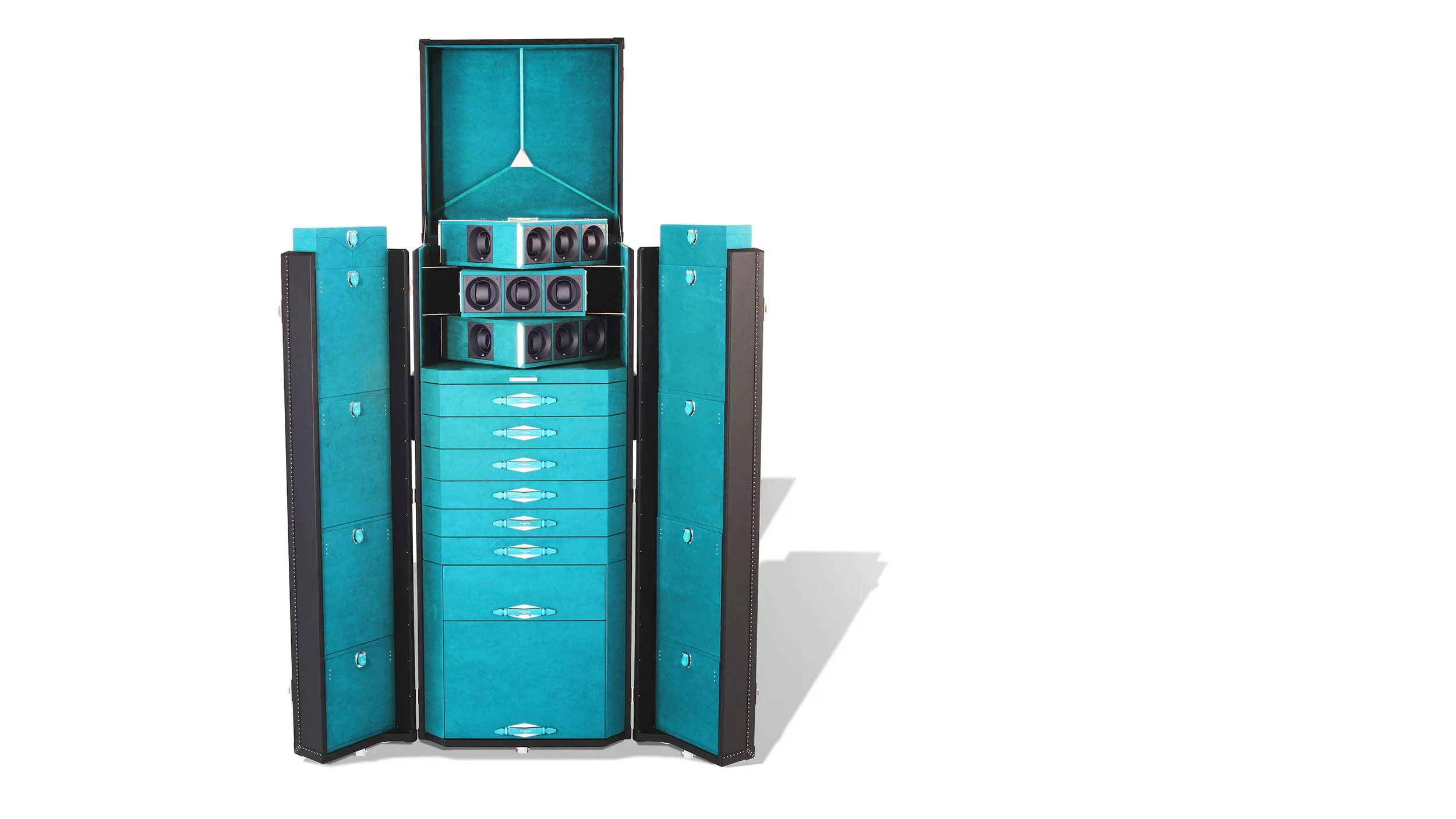
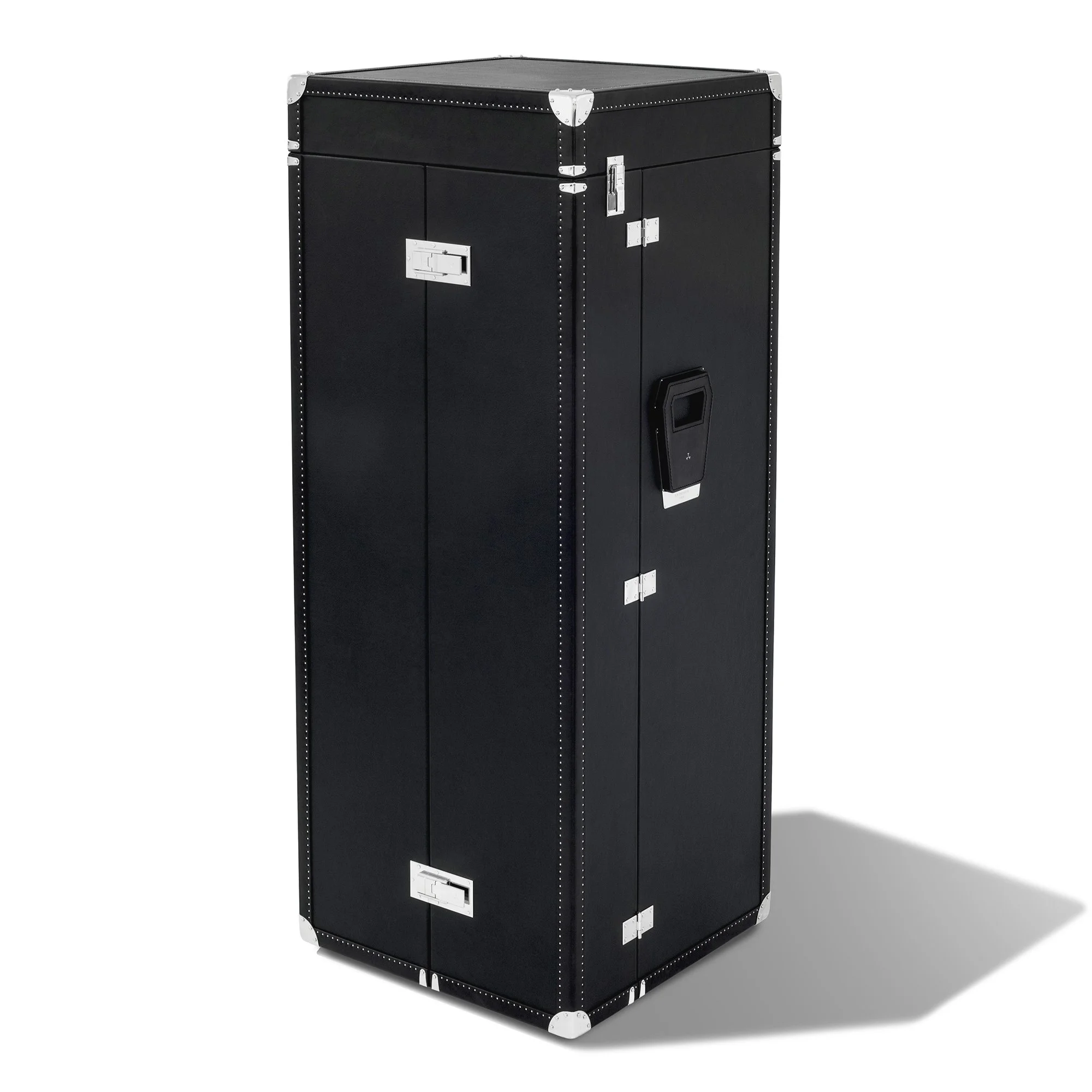
T512 Watch
Tout grand collectionneur trouvera ici son rituel quotidien.
Tout d'abord au son de la musique vibrant sur l'enceinte Devialet Phantom.
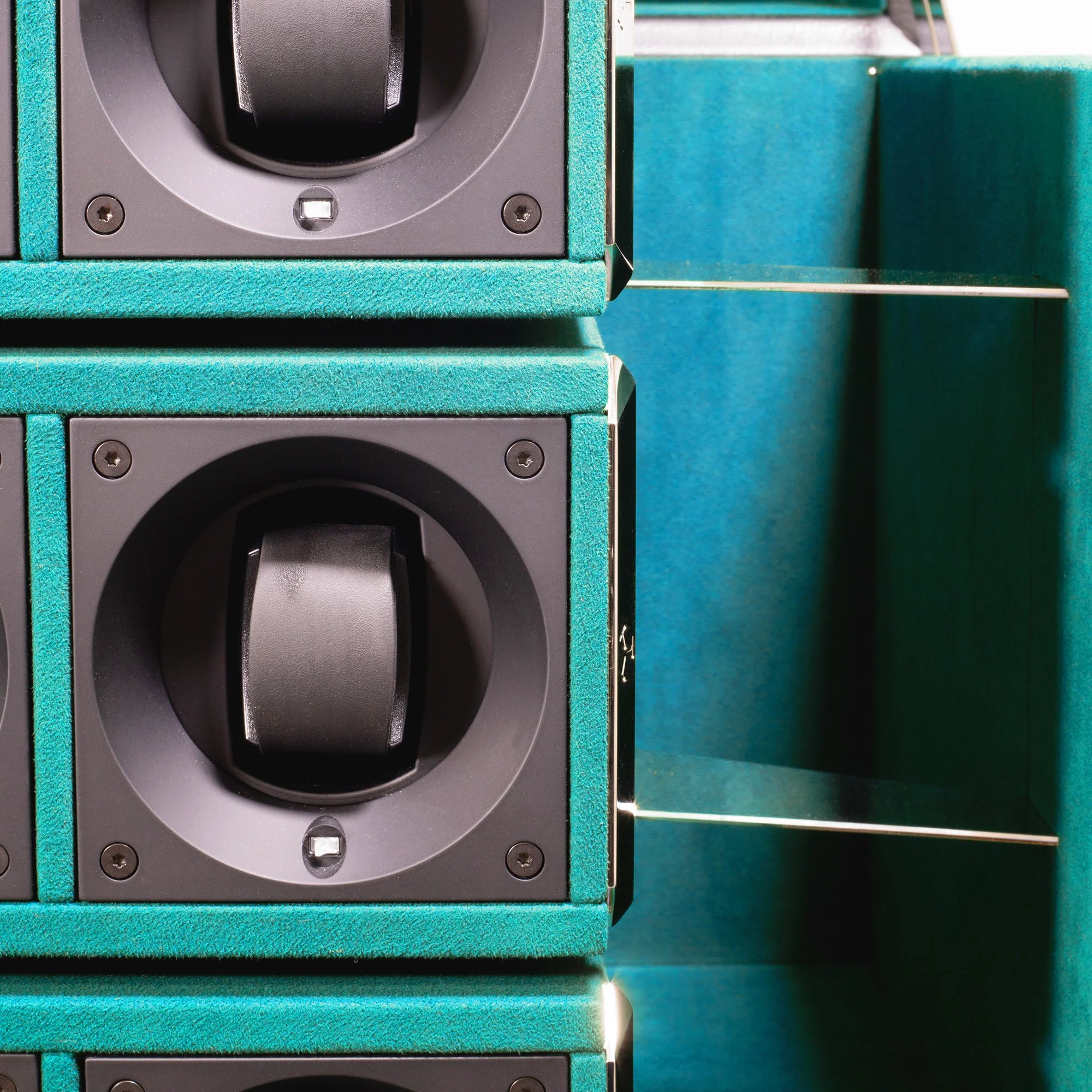
Puis le bonheur de redécouvrir, chaque jour, ses plus belles pièces horlogères en jouant autour du Rubik's Cube trônant sur la partie supérieure de la malle.
Avant de terminer par la sélection de son stylo et autres accessoires de circonstances pour chaque évènement de la journée à venir.
Every great collector will find a daily ritual and a refuge here.
Imagine the joy of rediscovering your most beautiful timepieces pieces while soft musical tunes play from the Devialet Phantom speaker. Or taking a moment to unwind with the Rubik's Cube placed on the top shelf of the trunk.
Special drawers for fine writing instruments and personal accessories have been added to address the collector's discerning demands.

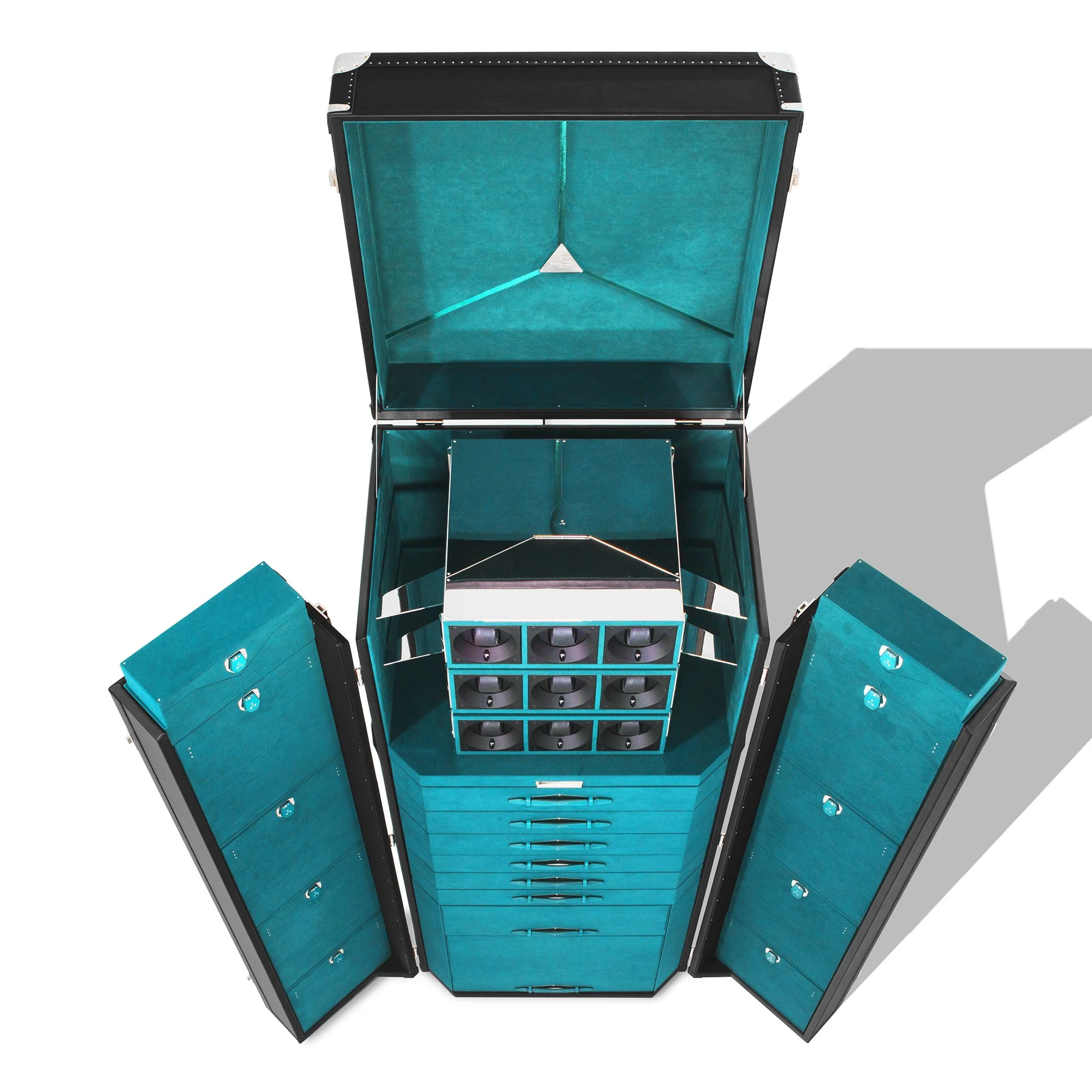
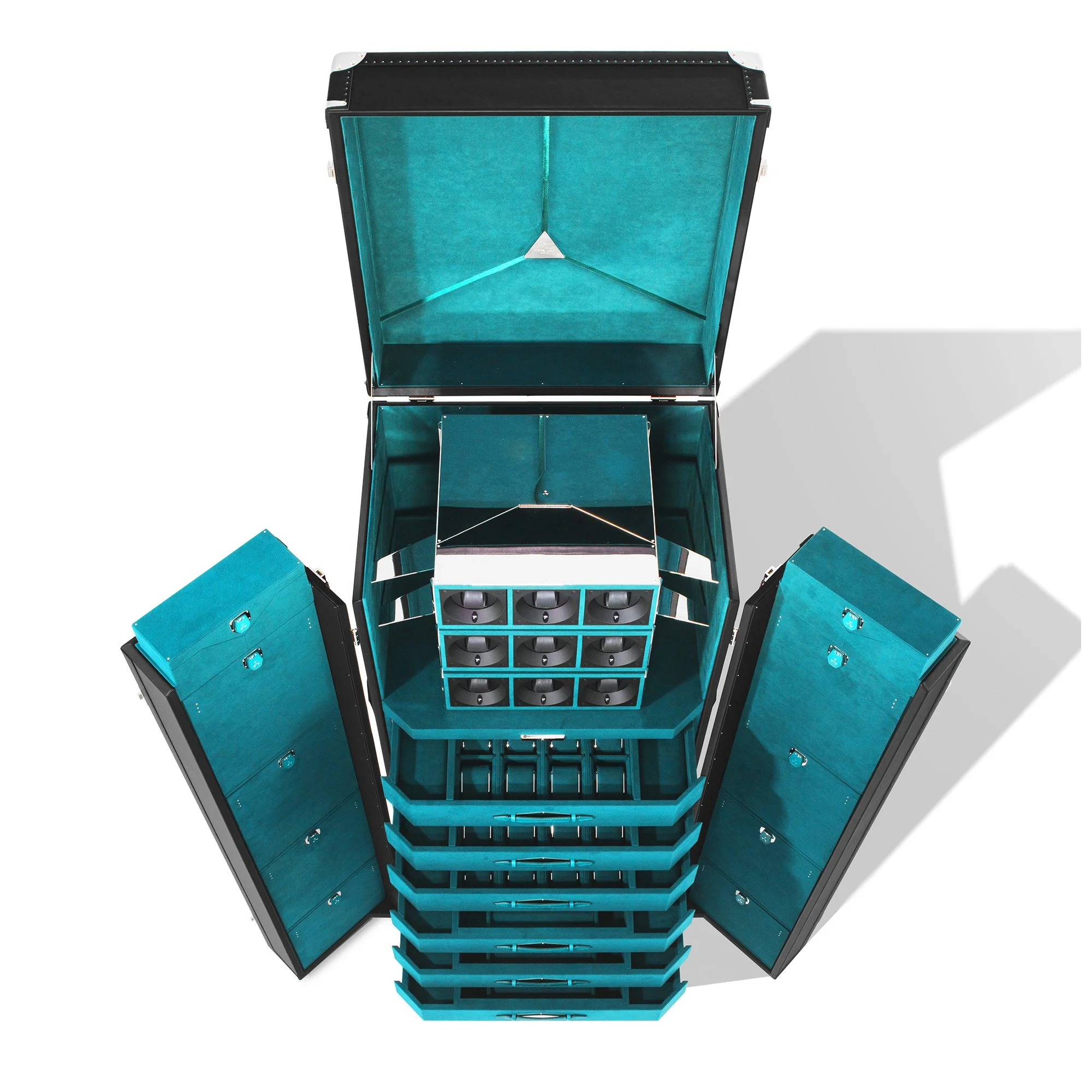
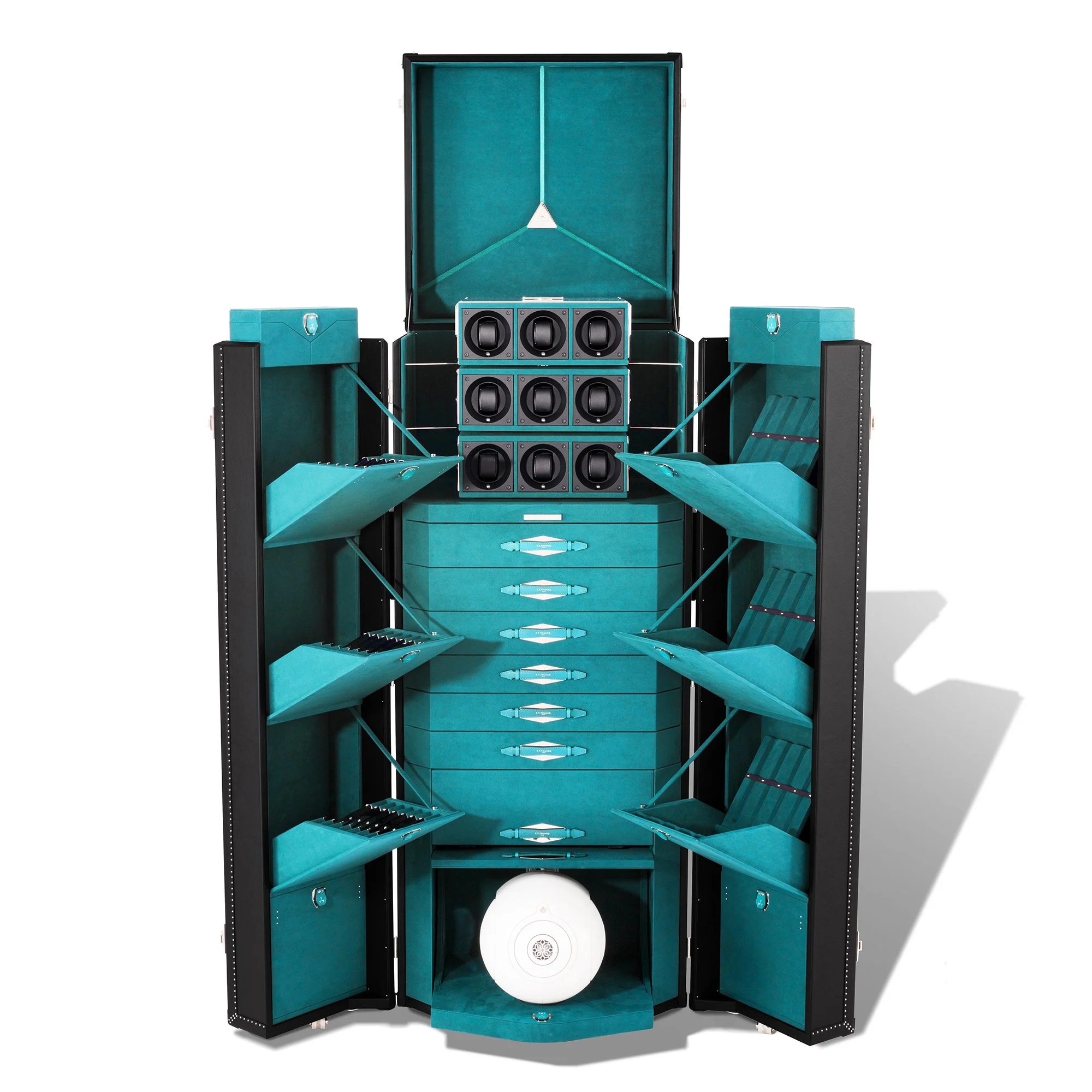
Le rituel du collectionneur/ The collector's ritual
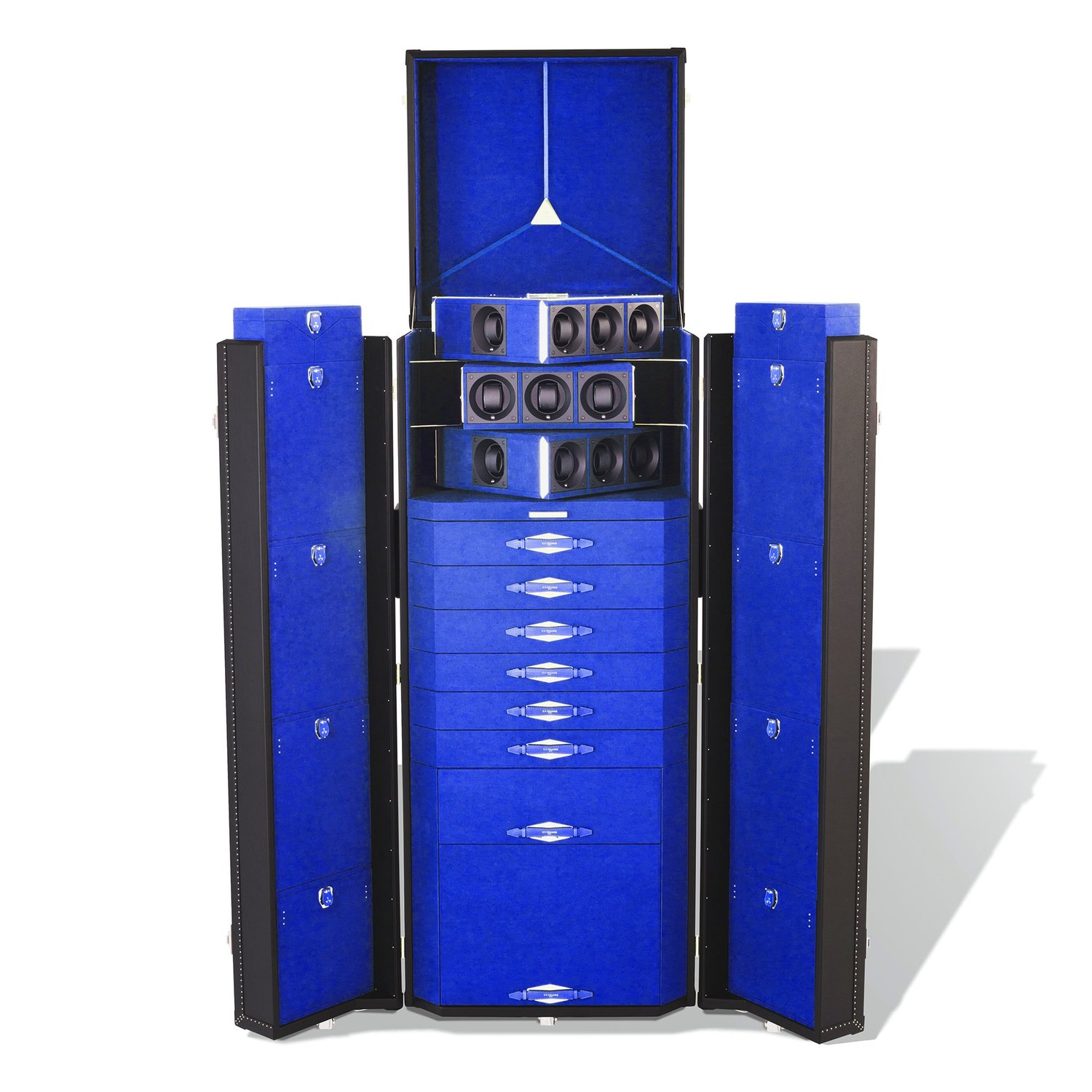
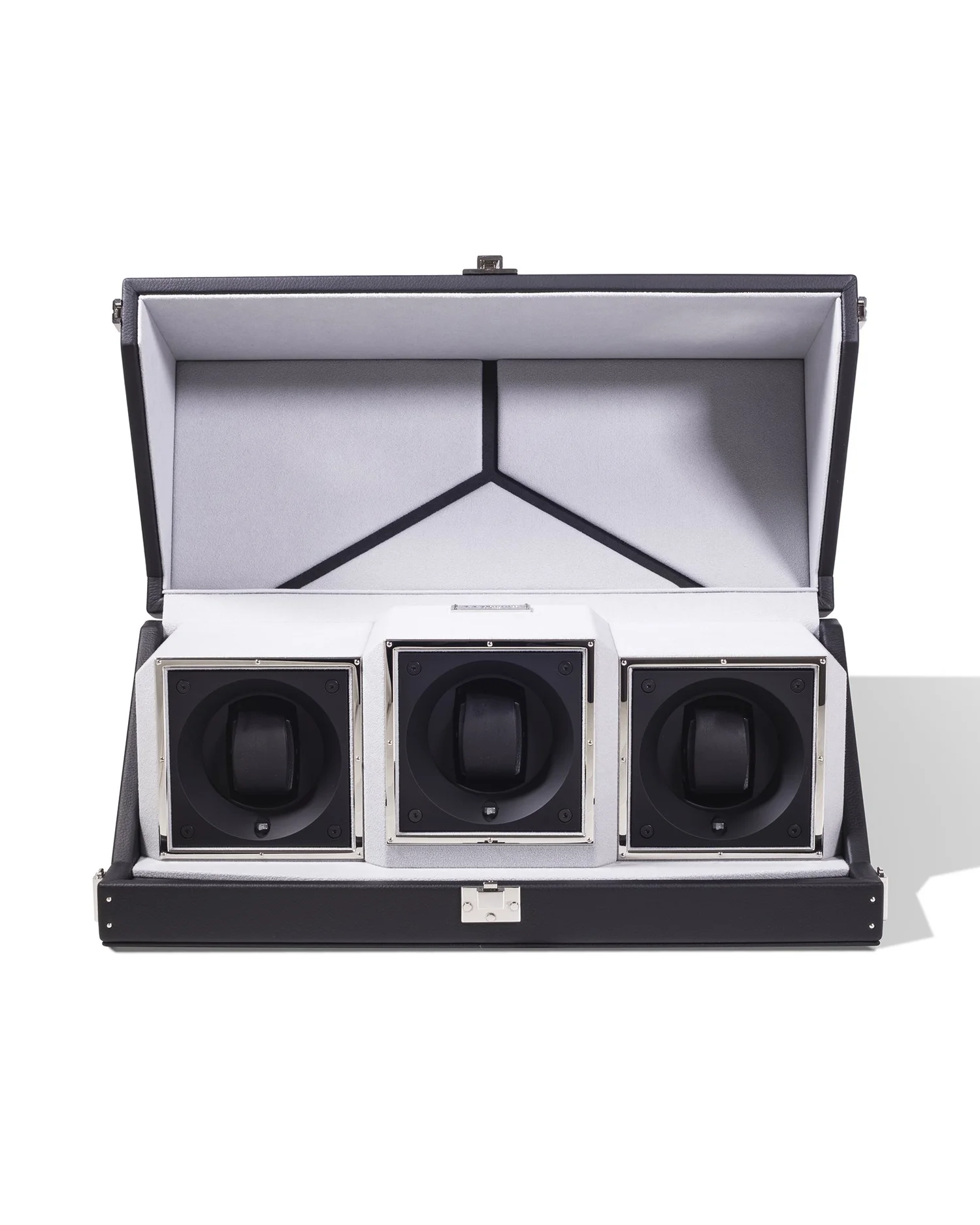
- Rubik's Cube de 24 remontoirs Swiss Kubik
- 3 tiroirs pour 36 montres sur rouleaux
- 3 tiroirs pour 48 paires de boutons de manchettes
- 24 compartiments additionnels pour les accessoires de l'homme
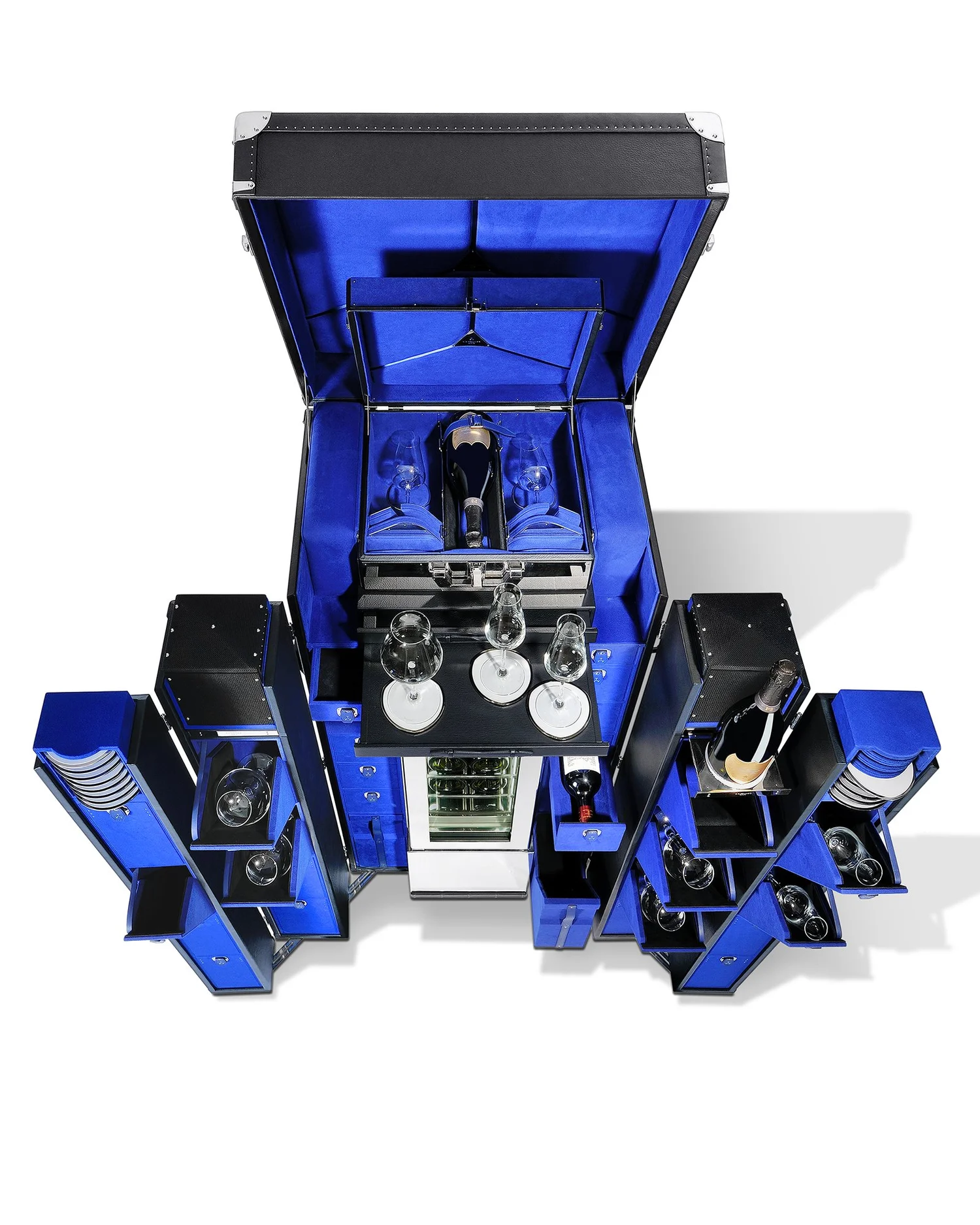
- Système son Cocktail Audio X45 et enceinte Devialet Phantom Gold
- Abattants vide-poche pour 30 stylos, documents et accessoires
- Rubik's Cube and 24 Swiss Kubik watch winders
- 3 drawers for 36 watches on rolls
- 3 drawers for 48 cufflink pairs
- 24 compartments for men's accessories
- Cocktail Audio X45 sound system and Devialet Phantom Gold speaker
- Storage flaps for 30 pens, documents and accessories
Le TourbillonThe Tourbillon
Le tourbillon, également appelé « cage tournante », est une complication horlogère ajoutée au mécanisme d'échappement, destinée à améliorer la précision des montres mécaniques en contrebalançant les perturbations de l'isochronisme du résonateur dues à la gravité terrestre. Ce mécanisme fut inventé par l'horloger et physicien français Abraham-Louis Breguet. En faisant tourner le régulateur, c'est-à-dire l'oscillateur et l'échappement, sur lui-même grâce à une cage mobile, le mécanisme lisse les perturbations subies par le calibre en raison de la gravité, d'huiles imparfaites ou d'autres défauts infimes du mouvement.
Le mot « tourbillon » choisi par Abraham-Louis Breguet ne renvoie pas, dans le vocabulaire de la fin du XVIIIe siècle, à l'idée d'une rotation violente ou d'une tempête. Il désigne alors, dans la tradition cartésienne reprise par l'Encyclopédie, un système planétaire et sa rotation, voire l'énergie qui fait tourner les planètes autour du soleil. Le choix de Breguet s'inscrit ainsi dans la pensée des Lumières, qui voyait dans l'horlogerie une représentation miniaturisée du cosmos.
The tourbillon, also called the « rotating cage », is a horological complication added to the escapement mechanism, intended to improve the precision of mechanical watches by counterbalancing the disturbances to the resonator's isochronism caused by terrestrial gravity. This mechanism was invented by the French watchmaker and physicist Abraham-Louis Breguet. By rotating the regulator, that is, the oscillator and the escapement, on itself by means of a mobile cage, the mechanism smooths the perturbations the calibre undergoes due to gravity, imperfect oils or other minute defects of the movement.
The word « tourbillon » chosen by Abraham-Louis Breguet does not refer, in the vocabulary of the late eighteenth century, to the idea of a violent rotation or a storm. It then designated, in the Cartesian tradition taken up by the Encyclopédie, a planetary system and its rotation, or even the energy that turns the planets around the sun. Breguet's choice belongs to the thought of the Enlightenment, which saw in watchmaking a miniaturised representation of the cosmos.
Trois signatures chromatiques/ Three chromatic signatures
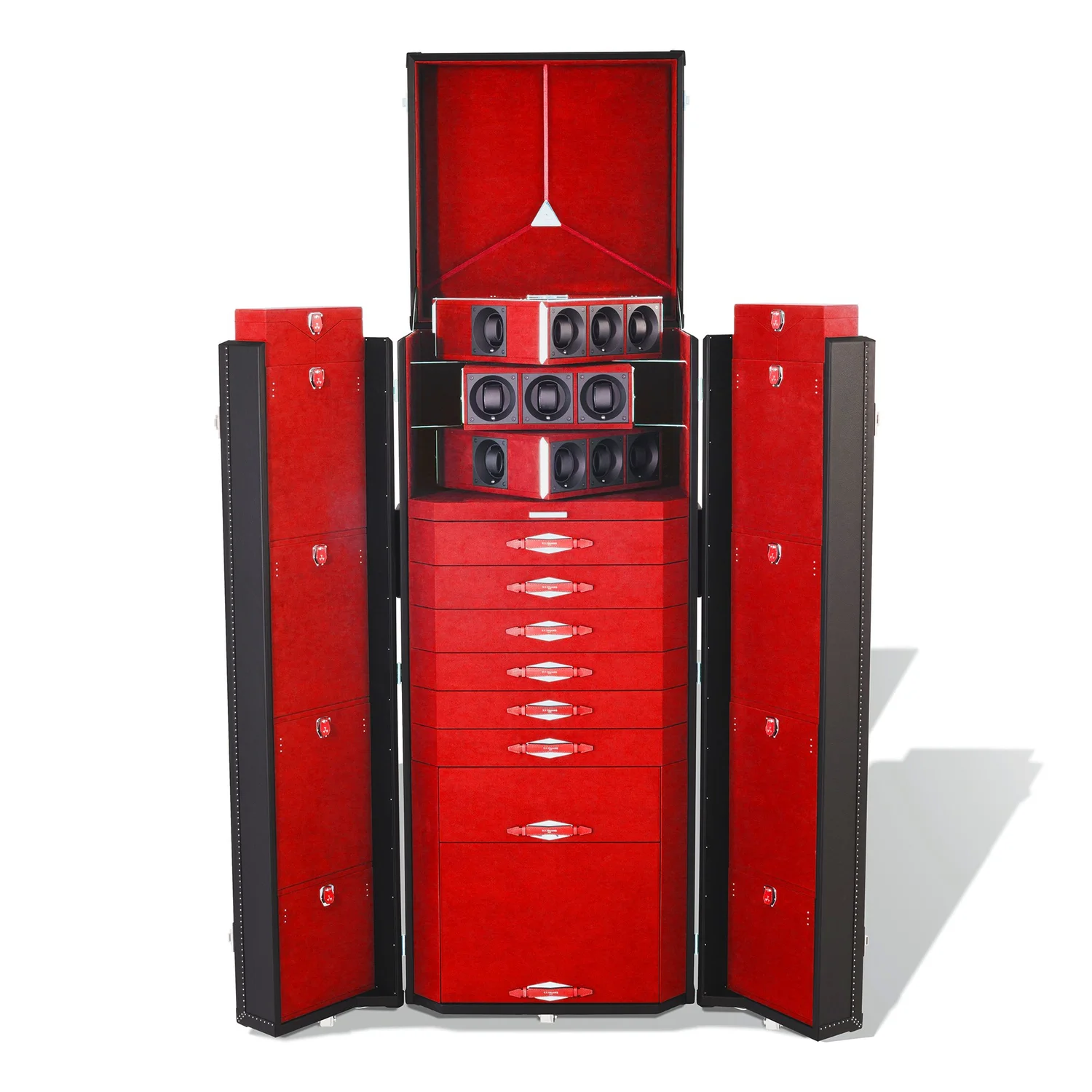
Rubis
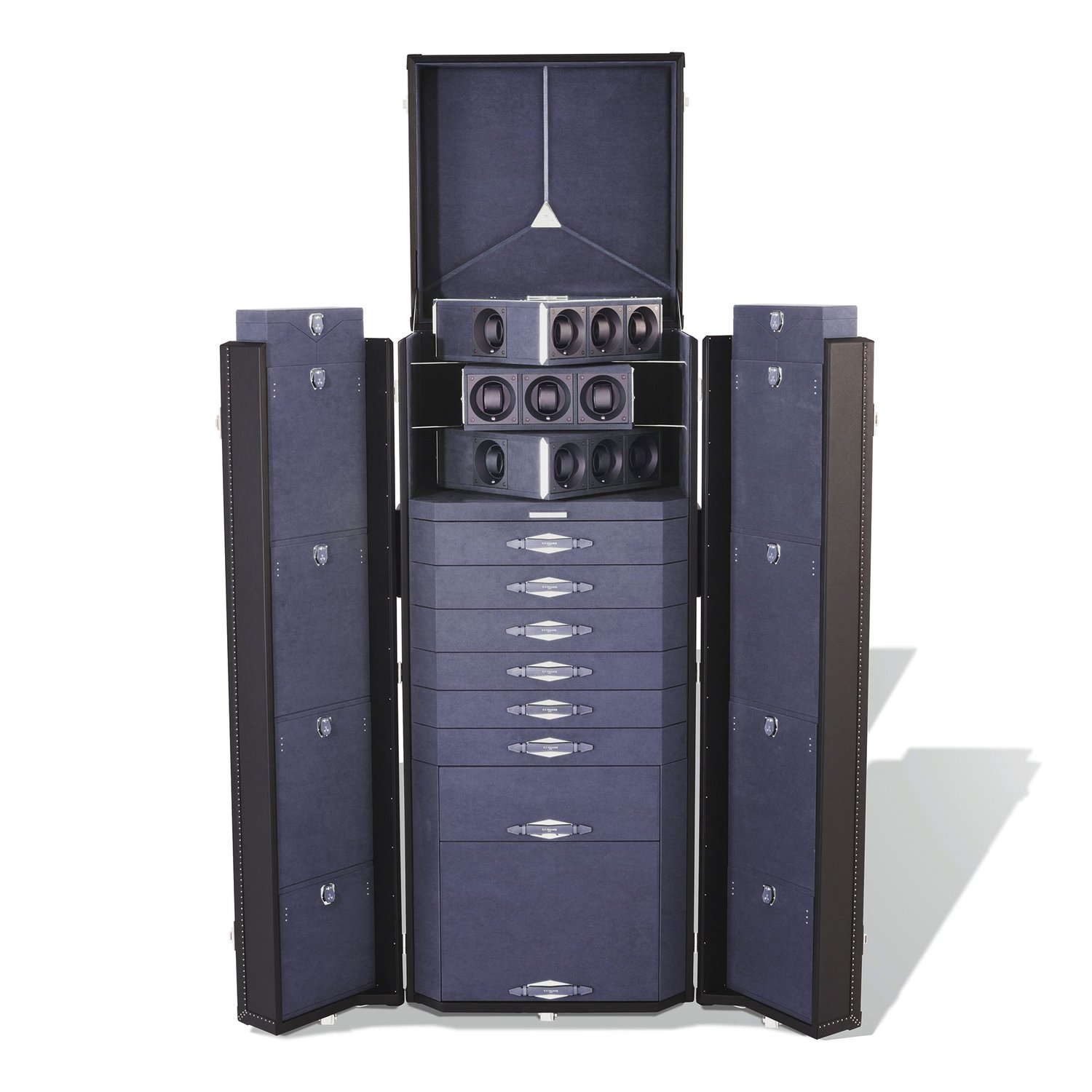
Noir